When Engineers Walk Out the Door, the Network Walks With Them

Photo by Photo by Lyubomyr Reverchuk on Unsplash on Unsplash
There is a particular kind of organizational amnesia that sets in when a veteran network engineer submits their resignation. The HR department calculates replacement costs. The hiring manager posts the job description. The team absorbs the workload. And somewhere in that transition, years of undocumented configuration logic, hard-won troubleshooting instincts, and institutional memory quietly disappear from the enterprise.
Across the United States, IT leaders are grappling with an accelerating skills exodus that is proving far more disruptive than workforce attrition statistics alone would suggest. The network talent crisis is not simply a hiring problem. It is a structural vulnerability — one that legacy infrastructure, fragmented tooling, and stagnant career pathways have collectively engineered over years of deferred investment.
The Infrastructure That Drives Engineers Away
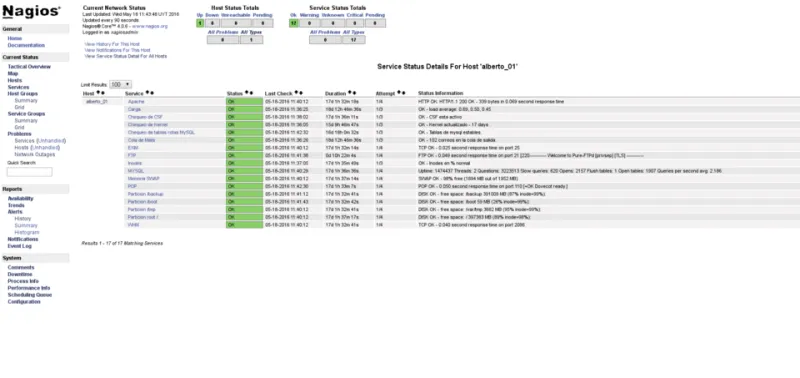
To understand why experienced network professionals are leaving, it helps to examine what they are leaving behind. In many enterprise environments, the daily reality for a network engineer involves navigating a patchwork of aging hardware, proprietary CLI interfaces, manual change management processes, and monitoring platforms that generate more noise than insight.
This is not an abstract complaint. According to recurring industry surveys, a significant proportion of mid-career network engineers cite frustration with outdated tooling and limited automation capabilities as primary factors in their decision to seek opportunities elsewhere. The competitive market for network talent — particularly professionals with expertise in SD-WAN, cloud networking, and zero-trust architectures — means those engineers rarely struggle to find a new role.
The irony is compounding. The very organizations that most need modernization are often the ones least equipped to retain the talent capable of executing it. Legacy infrastructure becomes both the symptom and the cause of the talent problem.
What Leaves With Them: The Institutional Knowledge Problem
When an organization loses a network engineer with five or ten years of tenure, it does not simply lose a set of certifications. It loses the accumulated context that transforms a network diagram into a living, operational system.
Consider what typically goes undocumented in an enterprise network environment: the reasons behind specific routing policy decisions made during a migration three years ago, the workarounds implemented to compensate for a vendor's firmware bug, the informal understanding of which legacy applications are sensitive to latency changes, the tribal knowledge of which configuration changes require a maintenance window even when the documentation says otherwise.
This kind of knowledge rarely survives a transition intact. A new hire — even a highly credentialed one — will spend months reconstructing context that their predecessor carried effortlessly. During that reconstruction period, the organization operates with reduced visibility, reduced agility, and elevated risk.
The Security Window Nobody Talks About
There is a particularly uncomfortable dimension to network talent attrition that does not receive sufficient attention in workforce planning conversations: the security exposure that opens during transitions.
Access credential management during offboarding is frequently cited as a weak point in enterprise security posture. Network engineers, by the nature of their role, accumulate privileged access across a wide surface area — routers, switches, firewalls, out-of-band management systems, cloud networking consoles, and vendor portals. Ensuring that access is fully revoked and audited at the point of departure requires both diligence and tooling that many organizations do not have fully in place.
Beyond offboarding hygiene, there is a subtler risk. The incoming engineer, unfamiliar with the environment, may make configuration changes that inadvertently introduce vulnerabilities — not through negligence, but through the absence of the contextual knowledge that would have flagged the risk. The network becomes temporarily more fragile precisely when the organization is most reliant on continuity.
The Downstream Effect on Digital Transformation
Enterprise digital transformation initiatives — cloud migration, AI infrastructure deployment, edge computing expansion, SD-WAN rollouts — share a common dependency that strategic planning documents rarely acknowledge explicitly: they require experienced network engineers to execute.
When talent attrition accelerates, transformation timelines stretch. Projects that were scoped assuming a certain level of in-house expertise suddenly require expensive consulting engagements or managed service arrangements. The cost differential between retaining an experienced engineer and replacing their contribution through external resources is frequently underestimated at the planning stage.
IT leaders who have lived through a major network transformation during a period of team instability describe the experience consistently: decisions that should take days take weeks, risk assessments become conservative to the point of paralysis, and the organizational confidence required to execute meaningful change erodes alongside the team.
Retention Through Modernization: A Practical Framework
The most effective retention strategies for network talent are not primarily compensation-driven, though market-rate pay is a necessary baseline. The engineers most likely to leave are often motivated by professional growth constraints as much as financial ones. They want to work with modern tooling. They want to build skills that remain relevant as the industry evolves. They want to see a career trajectory.
Modernization investments serve dual purposes in this context. Deploying network automation platforms, adopting infrastructure-as-code practices, and migrating to intent-based networking architectures simultaneously improve operational outcomes and signal to the engineering team that the organization is investing in their professional development.
Structured career pathways matter as well. Many enterprises lack a clear distinction between a network engineer who manages day-to-day operations and a network architect who shapes long-term infrastructure strategy. Creating that distinction — with defined competency frameworks and advancement criteria — gives experienced engineers a reason to grow within the organization rather than seeking recognition elsewhere.
Cross-functional exposure is another underutilized retention lever. Network engineers who participate in cloud architecture reviews, security incident response planning, and application performance discussions develop a broader organizational value that makes them less likely to view their role as a commodity function.
Documentation as Infrastructure
One of the most practical interventions available to IT leadership is treating documentation as infrastructure rather than administrative overhead. Organizations that invest in structured knowledge management — not just network diagrams, but decision logs, runbooks, and annotated change histories — reduce their dependency on individual tenure and create a more resilient operational foundation.
This is not a novel recommendation, but it is one that consistently falls victim to the pressure of operational demands. Making documentation a formal component of project completion criteria, rather than an afterthought, requires cultural reinforcement from leadership. The return on that investment becomes most visible precisely when it is most needed: during a transition.
The Talent Problem Is a Network Problem
For IT leaders managing enterprise connectivity strategy, the skills exodus deserves the same analytical rigor applied to infrastructure risk. The departure of experienced network engineers is not a background HR concern — it is a direct threat to network reliability, security posture, and the organization's capacity to execute on its technology roadmap.
The organizations that will navigate this challenge most effectively are those that recognize the connection between the quality of the engineering environment and the quality of the engineers willing to work within it. Modernizing the network is not just about performance metrics and operational efficiency. It is also about creating conditions in which skilled professionals can do meaningful work — and choose to stay.