When Every Device Becomes a Door: The Unmanaged IoT Crisis Reshaping Enterprise Security

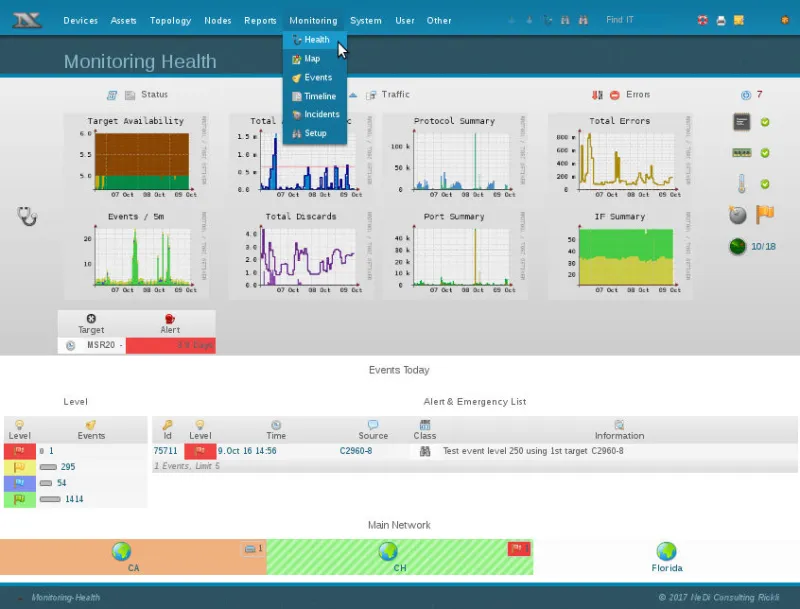
Photo: IoT devices connected enterprise network security data center, via store.outrightcrm.com
There is a reasonable argument that the most dangerous device on your enterprise network right now is not a laptop, a server, or even a misconfigured firewall. It is a conference room thermostat. Or a connected badge reader. Or a building management sensor that someone in facilities procurement installed three years ago without ever notifying the IT department.
This is not a hypothetical. Across US enterprises, the unchecked proliferation of Internet of Things devices has created a category of network participant that is simultaneously ubiquitous and invisible to the teams responsible for protecting the infrastructure those devices inhabit. The consequences are no longer theoretical — they are appearing in breach reports, regulatory filings, and post-incident analyses with alarming consistency.
The Scale of the Problem Is Still Being Underestimated
Industry analysts estimate that the number of connected IoT devices in enterprise environments will surpass 30 billion globally by 2030, with a significant share deployed across US commercial, industrial, and healthcare sectors. What those figures often obscure is the composition of that device population. Unlike managed endpoints — laptops, smartphones, and servers that fall under formal IT asset management — IoT devices are frequently procured outside traditional IT channels, installed by third-party contractors, and configured using default credentials that are never subsequently updated.
The result is a network topology that security teams cannot fully enumerate, let alone monitor. When you cannot see a device, you cannot assess its risk posture. When you cannot assess its risk posture, you cannot enforce policy. And when policy enforcement fails at the device level, threat actors gain a foothold that conventional perimeter defenses were never designed to detect.
The IT-OT Divide Is Widening the Exposure Window
Perhaps the most structurally underappreciated dimension of the IoT security problem is the organizational fault line between information technology and operational technology teams. In manufacturing plants, hospital systems, logistics facilities, and commercial real estate portfolios, OT teams manage the physical infrastructure — and increasingly, that infrastructure is networked. But OT professionals are trained to prioritize uptime and operational continuity, not cybersecurity hygiene. A firmware patch that introduces even marginal instability in a production environment is often viewed as a greater risk than a known vulnerability sitting unaddressed.
IT security teams, meanwhile, frequently lack the domain expertise to assess OT-specific protocols and device architectures. The resulting dynamic is one of mutual avoidance rather than collaboration: IT does not want to disrupt operations, OT does not want to cede control, and the devices sitting at the intersection of both domains go unmanaged.
This divide has been exploited in documented breach scenarios. The 2021 Oldsmar, Florida water treatment facility incident — in which an attacker briefly gained remote access through a legacy remote desktop application — illustrated how operational environments with minimal IT security oversight can become accessible through relatively unsophisticated means. Similar dynamics have played out in healthcare networks, where connected infusion pumps and imaging equipment have been identified as viable lateral movement pathways in penetration testing engagements.
Shadow Procurement Compounds the Visibility Problem
The IoT visibility gap is not solely a technical problem. It is a procurement and governance problem that technology alone cannot resolve. In large US enterprises, device acquisition decisions are frequently distributed across business units, facility managers, and departmental budget holders who operate independently of IT oversight. A regional office manager who purchases a smart conference room system, a maintenance supervisor who deploys wireless environmental sensors, or a logistics coordinator who installs fleet tracking hardware — each of these decisions introduces a new network participant that may never appear in an asset inventory.
Without a centralized process for registering and classifying connected devices at the point of procurement, security teams are perpetually chasing a moving target. By the time a vulnerability is disclosed for a specific device model, organizations may not even know how many of that device they have deployed, let alone where.
What Structured IoT Governance Actually Requires
Addressing the unmanaged IoT problem requires a framework that operates across three distinct layers: discovery, classification, and policy enforcement.
Discovery is the foundational layer and the one most organizations have underdeveloped. Passive network scanning tools designed specifically for IoT environments — capable of identifying devices by traffic behavior and protocol fingerprinting rather than relying on agent-based detection — are essential for building an accurate device inventory. This process should be continuous, not periodic, because the device population in most enterprise environments is not static.
Classification involves assigning each discovered device a risk profile based on its function, connectivity requirements, firmware status, and the sensitivity of the data or systems it can access. A connected printer in a general office environment carries a different risk profile than a networked sensor on a pharmaceutical production line. Governance frameworks that treat all IoT devices uniformly will either over-restrict benign endpoints or under-protect critical ones.
Policy enforcement is where network segmentation becomes indispensable. IoT devices should not share network segments with enterprise systems that hold sensitive data or provide access to core infrastructure. Micro-segmentation strategies — increasingly delivered through software-defined networking platforms — allow organizations to isolate device classes without requiring physical infrastructure changes. Devices that cannot be patched or updated should be contained in segments with strictly limited communication paths and monitored for anomalous behavior.
Governance Cannot Come at the Cost of Operational Agility
One of the more persistent objections to rigorous IoT governance frameworks is the concern that security controls will slow device deployment and impede the operational benefits that connected technology is supposed to deliver. This is a legitimate tension, and dismissing it does not make it disappear.
The answer lies in designing governance processes that are frictionless for compliant behavior and friction-generating for non-compliant behavior. Streamlined device onboarding workflows — where approved device categories can be registered and segmented automatically upon network connection — reduce the burden on operational teams while ensuring visibility is maintained. Procurement policies that require IT review for connected device purchases above a defined threshold create a checkpoint without becoming a bottleneck.
The organizations that are managing this balance most effectively are those that have established cross-functional IoT governance committees, bringing together IT security, OT, facilities management, and procurement stakeholders under a shared accountability structure. This is not a technology solution. It is an organizational one.
The Connectivity Imperative Demands a Security Counterpart
The enterprise IoT landscape is not going to contract. The operational value of connected devices — in energy management, predictive maintenance, supply chain visibility, and workforce productivity — is real and measurable. US organizations that resist connectivity in the name of security will find themselves at a competitive disadvantage. But those that embrace connectivity without the governance infrastructure to support it are accumulating a security debt that will eventually come due.
The devices you cannot see are not passive. They are active participants in your network, generating traffic, consuming bandwidth, and, in the absence of oversight, serving as potential entry points for adversaries who understand your infrastructure better than your own security team does. Closing that visibility gap is not optional. It is the foundational requirement for any enterprise security posture that claims to be fit for the current threat environment.