Disconnected by Default: How Network Silos Are Quietly Dismantling Your Real-Time Data Strategy
There is a particular kind of operational failure that rarely surfaces in post-mortems. It does not trigger an alert. It does not produce a ticket. It simply slows everything down — decision by decision, millisecond by millisecond — until the enterprise finds itself perpetually reacting rather than anticipating. That failure has a name: the network silo.
For years, IT organizations treated network segmentation as a security virtue. Isolate the finance systems from the warehouse floor. Keep the IoT sensors on their own VLAN. Partition the data science cluster from the production environment. These decisions, made incrementally and often for legitimate reasons, have accumulated into something far more damaging than any single architectural choice: a fragmented data landscape that fundamentally cannot support the real-time operational demands of 2025.
The Anatomy of a Data Pipeline Fracture
To understand why silos are so destructive to real-time data flows, it helps to trace the path that operational data actually travels inside a modern enterprise. Consider a mid-sized US logistics company managing a distribution network across twelve states. Inventory data originates at the warehouse edge. Route optimization models run in a private cloud environment. Customer-facing delivery estimates are generated by a SaaS platform. And financial reconciliation sits in an on-premises ERP system that predates the current CTO's tenure.
Each of these systems may function perfectly in isolation. But when a supply chain disruption demands an immediate, coordinated response — rerouting shipments, adjusting customer communications, updating financial forecasts simultaneously — the data pipeline must traverse four distinct network segments, each with its own authentication layer, latency profile, and data formatting convention. What should be a sub-second decision loop becomes a multi-minute manual reconciliation exercise.
This is not a hypothetical. According to industry research, enterprises with highly fragmented network architectures report decision latency that is, on average, four to seven times higher than their peers operating on unified or well-integrated platforms. In logistics, retail, financial services, and manufacturing — sectors where competitive advantage is measured in seconds, not minutes — that gap is existential.
Why Silos Persist Despite the Evidence
If network silos are this damaging, why do they continue to proliferate? The answer lies in a combination of organizational inertia, budget cycles, and the genuine complexity of enterprise infrastructure governance.
First, silos are rarely created with malicious intent. They emerge from legitimate decisions made by different teams at different times. A security architect isolates a segment to contain a breach vector. A business unit deploys its own cloud instance to avoid a lengthy procurement process. A legacy acquisition gets absorbed without full network integration because the migration cost exceeded the quarterly budget. Each decision, viewed in isolation, is defensible. Viewed collectively, they constitute a structural liability.
Second, the cost of silos is diffuse and difficult to attribute. When a real-time analytics dashboard refreshes thirty seconds late, no one files a root cause analysis. When an automated pricing model fails to incorporate the latest inventory data, the revenue impact is rarely traced back to a network routing inefficiency. The damage accumulates invisibly, which is precisely what makes it so dangerous.
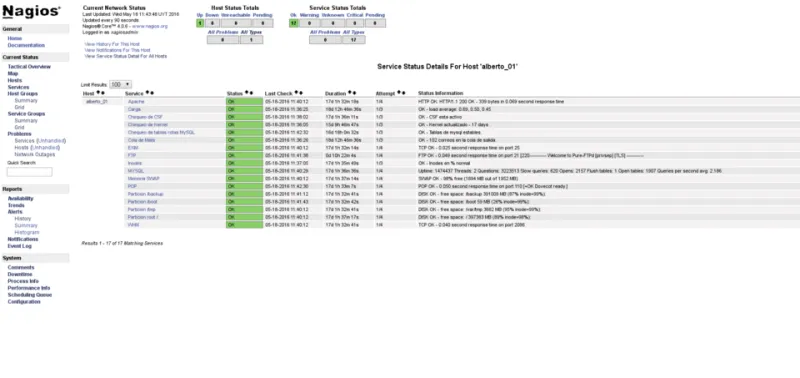
Third, and perhaps most importantly, many enterprises lack the observability tooling to even see the problem clearly. Without end-to-end network visibility that spans on-premises infrastructure, private cloud, and public cloud environments simultaneously, IT leaders are essentially navigating by instrument failure.
The Real-Time Imperative Is Not Forgiving
The urgency of this problem has intensified significantly as enterprises have embedded real-time data requirements deeper into their core operations. Artificial intelligence inference workloads, automated trading systems, predictive maintenance platforms, and dynamic pricing engines all share a common dependency: they require data that is current, complete, and delivered with minimal latency. A model trained on stale or incomplete data does not just produce suboptimal outputs — it can produce actively harmful ones.
Consider the manufacturing sector, where US industrial firms have invested heavily in digital twin technology over the past several years. A digital twin is only as accurate as the data feeding it. When sensor telemetry from the plant floor must traverse three network segments before reaching the simulation environment, the twin begins to drift from reality. Maintenance decisions get made against a model that no longer reflects actual machine state. The predictive maintenance promise collapses not because the technology failed, but because the network architecture could not support it.
A Framework for Identifying and Addressing Silo Risk
Addressing network silos requires a structured approach that begins with visibility and ends with architectural commitment. The following framework offers a practical starting point for IT leaders ready to take the problem seriously.
Map the actual data flow, not the intended one. Most enterprises have network diagrams that reflect how architects wanted data to move, not how it actually moves in production. Deploying network traffic analysis tools that capture real flow patterns — including east-west traffic between internal segments — frequently reveals routing inefficiencies and data path redundancies that no one knew existed.
Quantify latency at every segment boundary. Each handoff between network segments introduces measurable latency. Instrumenting these boundaries and establishing baseline measurements creates the empirical foundation needed to prioritize remediation efforts. Segments introducing the highest latency on the most time-sensitive data paths should be addressed first.
Audit authentication and protocol mismatches. A significant portion of inter-segment latency is not caused by bandwidth constraints — it is caused by protocol translation overhead and authentication handshakes that were never optimized for high-frequency data exchange. Identifying these mismatches often reveals quick wins that do not require major infrastructure investment.
Evaluate software-defined networking as a unification layer. For enterprises operating across hybrid environments, software-defined networking and SD-WAN solutions offer a path toward logical unification without requiring physical infrastructure replacement. These technologies can abstract segment boundaries and apply consistent policy frameworks across disparate network environments, significantly reducing the operational friction that silos introduce.
Establish cross-functional ownership of the data pipeline. Perhaps the most underappreciated element of silo remediation is organizational. Real-time data pipelines span networking, security, application, and data engineering domains. Without a designated owner accountable for end-to-end pipeline performance, remediation efforts stall at team boundaries — ironically replicating the same silo dynamic at the organizational level.
The Competitive Clock Is Running
US enterprises competing in data-intensive markets do not have the luxury of treating network architecture as a back-office concern. The organizations that will define the next generation of operational excellence are those that have recognized a fundamental truth: connectivity is not infrastructure support for the data strategy — it is the data strategy.
Network silos represent an accumulated debt that compounds with every new real-time workload added to the enterprise stack. The longer remediation is deferred, the more deeply embedded these fractures become, and the more expensive they are to address. For IT leaders who have been watching performance metrics degrade without a clear explanation, the network itself may be the answer they have been overlooking.
The pipeline is only as strong as the network it runs through. And right now, for too many enterprises, that network is working against them.