When Telemetry Outruns Intelligence: The Analytics Lag Quietly Costing Enterprises Their Competitive Edge
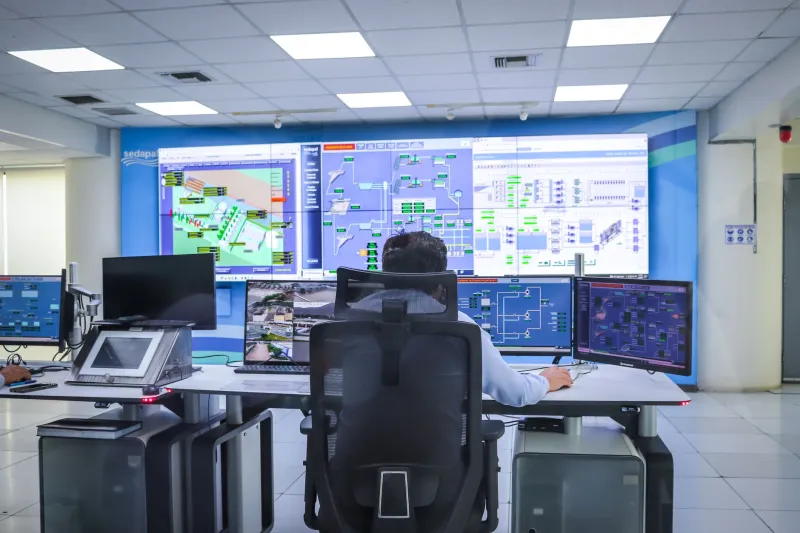
There is a particular kind of organizational frustration that arrives not from a lack of data, but from an abundance of it. Across enterprise network operations centers in the United States, teams are sitting in front of dashboards populated with millions of telemetry events per second — flow records, packet captures, latency traces, device health signals — and yet the decisions that depend on that data are still being made on instinct, intuition, and experience rather than on real-time intelligence.
The problem is not collection. Enterprises have largely solved the challenge of gathering network telemetry at scale. The problem is conversion: transforming raw signal into structured insight fast enough to actually influence a decision before the window for that decision has closed.
The Widening Gap Between Data Speed and Decision Speed
In most enterprise analytics architectures, telemetry data moves through a pipeline that was designed for completeness rather than immediacy. Events are ingested, normalized, enriched with contextual metadata, aggregated across time windows, and then surfaced through a visualization layer. Each of those steps introduces latency. Individually, those delays are measured in seconds or minutes. Cumulatively, they can stretch into intervals that render the resulting intelligence operationally irrelevant.
Consider what that latency means in practice for a high-frequency trading firm operating out of a Chicago or New York data center. A network anomaly that introduces 40 milliseconds of unexpected latency on a critical execution path is a significant event — but if the analytics pipeline takes four minutes to surface that anomaly as a structured alert, the trading window has already closed, the position has already been impacted, and the insight arrives as a postmortem rather than a decision-support tool.
E-commerce operations face a structurally similar challenge during peak traffic events. A Black Friday traffic surge that begins degrading checkout conversion rates in real time requires a response measured in seconds, not the several-minute delay that most conventional analytics stacks introduce between observation and notification.
Why Pipelines Were Not Built for This Moment
The analytics architectures that underpin most enterprise network operations were designed during an era when the primary use case was retrospective analysis — understanding what happened after an incident, generating compliance reports, and identifying optimization opportunities over long time horizons. That design philosophy embedded assumptions about acceptable latency that no longer align with how enterprises actually operate.
Batch processing remains the default processing model in a surprising number of organizations, even those that have made significant investments in modern infrastructure. Streaming analytics platforms like Apache Kafka, Apache Flink, and AWS Kinesis have been widely adopted in principle, but the operational complexity of building and maintaining low-latency enrichment pipelines means that many deployments revert to near-real-time or micro-batch architectures that still introduce meaningful delays.
There is also the challenge of enrichment latency. Raw telemetry data — a flow record, a BGP update, a device health metric — carries limited business context on its own. To become actionable, that data typically needs to be joined against asset inventories, application dependency maps, user identity systems, and business service catalogs. Each of those enrichment lookups adds time, and in many enterprise environments, those reference datasets are themselves not maintained with the freshness that streaming analytics demands.
The Business Impact Nobody Is Measuring
What makes this problem particularly difficult to address is that its costs are largely invisible. Network teams measure mean time to detect and mean time to respond, but those metrics capture the interval from alert generation to resolution — not the interval from event occurrence to alert generation. The latency that exists within the analytics pipeline itself is rarely tracked, rarely reported to leadership, and rarely treated as a performance metric in its own right.
This measurement gap creates a misleading picture of operational capability. An organization might report a mean time to detect of under five minutes while its analytics pipeline is introducing three minutes of pre-alert latency, meaning that the actual window between a network event occurring and a human being aware of it is considerably longer than the reported metric suggests.
For industries where network performance is directly correlated with revenue — financial services, e-commerce, real-time media delivery, logistics — that unmeasured latency represents a quantifiable competitive liability. The organizations that have recognized this and invested in reducing insight latency to sub-second intervals are operating with a structural advantage that their competitors may not even recognize they are missing.
Closing the Gap: Architecture Principles for Insight Velocity
Addressing the analytics latency problem requires a deliberate shift in design philosophy — from building pipelines optimized for completeness to building pipelines optimized for speed, with completeness achieved through subsequent enrichment passes rather than as a precondition for alerting.
Several architectural principles support this reorientation. First, separating the fast path from the slow path: critical alerting logic should operate on minimally enriched data as close to the collection point as possible, with full enrichment and contextual analysis applied asynchronously for deeper investigation workflows. This approach allows the system to surface a high-confidence signal within milliseconds of an event occurring, even if the full contextual picture takes additional seconds to assemble.
Second, treating reference data as a streaming resource rather than a static lookup. Asset inventories and application dependency maps that are updated through batch processes introduce staleness that compounds the enrichment latency problem. Maintaining those datasets as continuously updated streams — and co-locating them with the enrichment logic — eliminates a significant source of pipeline delay.
Third, instrumenting the pipeline itself. The analytics infrastructure should be subject to the same observability standards as the network it monitors. Measuring and alerting on enrichment latency, processing backpressure, and time-to-alert intervals creates the operational visibility needed to identify and address performance degradation before it becomes a business problem.
The Competitive Calculus
The organizations that will define the next phase of enterprise network operations are not necessarily those with the most telemetry data — they are those that have reduced the interval between event and intelligence to a point where analytics genuinely shapes real-time decision-making rather than simply documenting what has already occurred.
In sectors where milliseconds carry measurable economic weight, insight velocity is not a technical nicety. It is a competitive variable that belongs in the same strategic conversation as network capacity, redundancy, and security posture. The enterprises that recognize this distinction — and invest accordingly — will find that their network analytics infrastructure becomes a genuine source of operational advantage rather than an expensive record-keeping system that always seems to deliver its most important findings slightly too late.